

The Rigveda does not open with a narrative of cosmic genesis, an abstract philosophical discourse on reality, or a distant deity. It opens with the mechanics of heat.
अग्निमीळे पुरोहितं यज्ञस्य देवमृत्विजम् होतारं रत्नधातमम्
agnim īḷe purohitaṃ yajñasya devam ṛtvijam · hotāraṃ ratnadhātamam
I invoke Agni set in front, the divine priest of the sacrifice, the invoker, the most lavish bestower of treasure.
Rigveda 1.1.1
The first hymn of the oldest living text in the Indic civilization addresses Agni. The layout of this initial verse outlines a functional process through four specific technical capacities assigned to fire: purohita, ṛtvij, hotā, and ratnadhātama.
• Purohita combines puro (in front) and hita (placed). It designates that which stands at the boundary line, acting as the primary point of contact and mediator between two states of matter or consciousness.
• Ṛtvij means acting in structural compliance with ṛtu (the seasonal or cyclical timing) and ṛta (the overarching cosmic order). This implies that systemic transformation cannot occur via chaotic heat; it must follow natural law.
• Hotā is the functional invoker derived from the root hu (to pour into a flame). It represents the active catalyst that draws the elements into the field of transformation.
• Ratnadhātama is the superlative form of the bestower of ratna (luminous assets or optimal systemic outputs).
When these terms are read as an integrated framework, they describe a specific input-output system: an element is offered, Agni processes it, converts its state, and returns a refined byproduct of a higher order. This is the operational layout of the Vedic yajña (sacrifice).
The historical misinterpretation of this architecture lies in treating it purely as external ritualism. As analyzed by Sri Aurobindo in The Secret of the Veda, the Vedic language uses structural homologies where physical descriptions match internal psychological states. Agni represents kratu (क्रतु, from √kṛ, “to do”), the targeted processing force and conscious intent within the human system. It is the drive that prevents stagnation by continually converting raw experience into structural growth. This metabolic and psychological blueprint is the exact foundation inherited by both Yoga and Ayurveda.
The External Separation Framework
During the nineteenth century, European Indological analysis applied a linear historical framework to these texts. This methodology assumed a progressive evolution from primitive nature worship to abstract logic. Consequently, scholars categorized the Rigveda as basic pastoral poetry focused on material acquisitions like rain and livestock, while treating later texts like the Upaniṣads and Yoga Sūtras as separate, detached philosophical movements that rejected the Vedic root. This categorical separation enabled the modern commercial extraction of these sciences. By decoupling the practices from their systemic framework, the global market isolated individual elements to serve specific consumer niches.
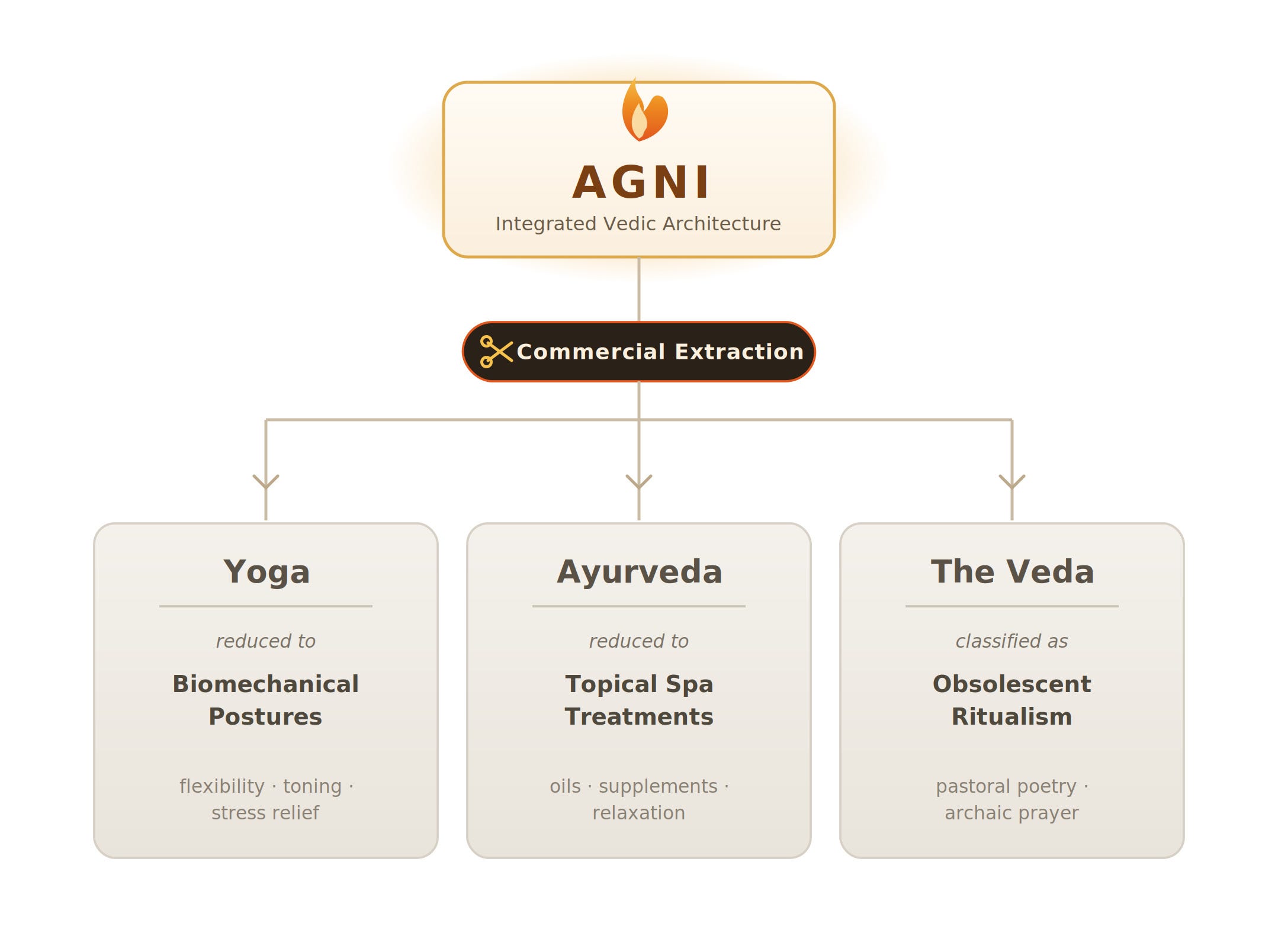
Figure 1. Commercial extraction fragments a single integrated architecture into three detached consumer categories.
This extraction altered the baseline definitions of the practices: